







A bleeding period that feels heavier than usual can be unsettling, but not every heavy flow signals something serious. When bleeding soaks through protection every one to two hours, lasts longer than seven days, or disrupts your sleep and daily routine, however, it crosses into territory worth paying attention to. This guide explains — in plain, practical language — what counts as heavy menstrual bleeding, what commonly causes it, how it affects your overall health, and exactly when to reach out for medical support.
Key Takeaways
- A heavy period (menorrhagia) is medically defined as losing more than 80 mL of blood per cycle — roughly equivalent to soaking through a pad or tampon every one to two hours for several consecutive hours.
- Common causes include uterine fibroids, hormonal imbalances, endometrial polyps, bleeding disorders such as von Willebrand disease, and pregnancy-related bleeding.
- Repeated heavy periods can lead to iron-deficiency anaemia, causing fatigue, breathlessness, and difficulty concentrating.
- A clear self-triage framework — based on flow rate, clot size, cycle length, and symptoms like dizziness — can help you decide whether to monitor at home, book a doctor’s appointment, or go to emergency.
- Effective treatments range from iron supplementation and hormonal birth control to tranexamic acid, hormonal IUDs, and, in some cases, minor surgical procedures.
What Exactly Is a Heavy Bleeding Period (Menorrhagia)?
A heavy bleeding period, clinically known as menorrhagia, is defined as menstrual blood loss exceeding 80 millilitres per cycle. Because measuring millilitres at home is not practical, healthcare providers use simpler, observable benchmarks: soaking through a standard pad or tampon every one to two hours for two or more consecutive hours, passing blood clots larger than a 50-cent coin, or bleeding that continues for more than seven to eight days.
To put the 80 mL figure into perspective, the average period involves around 30–40 mL of total blood loss across the entire cycle — roughly two to three tablespoons. A heavy period can be double that or more. The term menorrhagia applies when this level of bleeding occurs regularly, either on its own or alongside significant pain.
It is important to recognise that “heavy” is partly subjective — what feels overwhelming to one person might be a normal variation for another. The clinical definition exists to anchor the conversation in measurable, comparable data rather than personal perception alone. Tracking your cycle for two to three months using an app or a simple journal — noting how many products you use each day, whether you pass clots, and how long the bleeding lasts — gives you concrete information to share with a doctor.
How Do You Know If Your Bleeding Period Is Normal or Too Heavy?
The most practical way to assess your bleeding period is to use clear, observable reference points rather than trying to estimate volume.
| Measure | Typical Normal Range | Potentially Heavy / Concerning |
|---|---|---|
| Total blood loss per cycle | 20–80 mL (1–5 tablespoons) | More than 80 mL |
| Cycle duration | 3–7 days | 8 days or longer |
| Protection change frequency | Every 3–6 hours | Every 1–2 hours or more frequently |
| Blood clots | Small, occasional, smaller than a grape | Larger than a 50-cent coin, frequent |
| Sleep disruption | Rarely or never | Waking at night to change protection |
| Impact on daily activities | Manageable with standard protection | Avoiding activities, needing double protection |
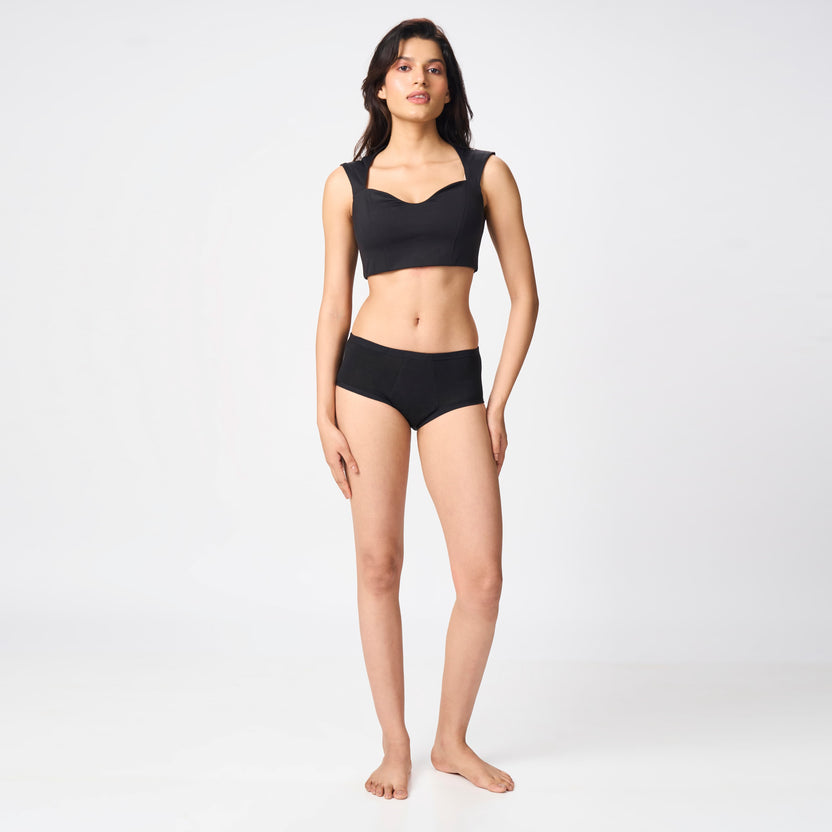
Warning signs that go beyond heavy and signal greater urgency include soaking through both clothing and protection, feeling dizzy or faint, experiencing severe pelvic pain alongside the bleeding, or noticing a sudden change in your usual pattern. Many women in Sri Lanka are finding that reusable period panties offer not only comfortable leak protection on heavy days, but also a clearer visual reference for how much blood is being absorbed — useful when you are trying to track changes in your flow over time.
What Are the Most Common Causes of a Heavy Bleeding Period?
A heavy bleeding period rarely has a single, simple cause. Understanding the range of possibilities helps you have a more informed and productive conversation with your healthcare provider.
Uterine Causes: Fibroids and Polyps
Uterine fibroids — non-cancerous muscular growths inside or on the wall of the uterus — are among the most common reasons for abnormally heavy periods. They can distort the uterine cavity and increase the surface area that sheds during menstruation, resulting in significantly heavier flow and sometimes more intense cramping. Endometrial polyps, which are small tissue overgrowths on the inner lining of the uterus, have a similar effect. Adenomyosis, where uterine lining tissue grows into the muscular wall of the uterus itself, is another structural cause that frequently produces heavy, crampy, and prolonged periods. All three conditions are detectable via ultrasound and are generally very treatable.
Hormonal Causes and Anovulatory Bleeding
Hormonal imbalances — particularly a disruption in the balance between oestrogen and progesterone — are a leading driver of heavy periods, especially at the extremes of reproductive life. When ovulation does not occur (a pattern called anovulation), progesterone is not produced in sufficient amounts to balance oestrogen. The result is an overly thickened uterine lining that, when it eventually sheds, produces heavier-than-normal bleeding. Thyroid disorders — both an underactive thyroid (hypothyroidism) and an overactive thyroid (hyperthyroidism) — can disrupt the hormonal regulation of menstruation. Polycystic ovary syndrome (PCOS) is closely linked to anovulatory cycles and irregular, sometimes very heavy, bleeding episodes.
Bleeding Disorders: Von Willebrand Disease and Others
Research suggests that up to 20% of women with consistently heavy periods may have an underlying bleeding disorder. The most common is von Willebrand disease (VWD), a condition in which the blood lacks a sufficient amount of a key clotting protein. VWD is frequently undiagnosed because its primary symptom — heavy periods — is too often dismissed as just a bad cycle. Other platelet function disorders can produce similar symptoms. If you have had extremely heavy periods since puberty, or if you also tend to bruise easily, bleed heavily after dental procedures, or experience prolonged bleeding from cuts, discussing a bleeding disorder screen with your doctor is worthwhile.
Pregnancy-Related Bleeding: Miscarriage and Ectopic Pregnancy
Any unexpectedly heavy or irregular bleed should prompt consideration of pregnancy-related causes, especially if there is any possibility of pregnancy. A miscarriage typically presents as heavy bleeding with cramping and may involve the passage of tissue. An ectopic pregnancy — where a fertilised egg implants outside the uterus, most often in a fallopian tube — can cause dangerous internal bleeding and is a medical emergency. If you suspect you could be pregnant and are experiencing heavy bleeding, particularly with severe one-sided abdominal or shoulder-tip pain, seek emergency care immediately. A home pregnancy test is a reasonable first step in any situation where pregnancy is possible.
For broader information on managing your menstrual cycle with confidence, our period.lk blog covers everything from product guides to practical menstrual health tips tailored for women in Sri Lanka.
Does a Heavy Bleeding Period Affect Mental Health and Quality of Life?
The psychological and social impact of a consistently heavy bleeding period is significant — and yet it is one of the most underacknowledged aspects of menorrhagia in both clinical and everyday conversations. Research consistently shows that women with heavy periods report measurably lower quality of life, including avoidance of physical activities, social events, sports, and travel during their period. The constant mental load of anticipating leaks, planning around your cycle, needing to change protection frequently, waking in the night, and wearing dark clothing as a precaution all accumulate into a pattern of anxiety and exhaustion that compounds the physical burden.
Many women describe feeling embarrassed to raise the subject with a doctor, or they normalise an extremely heavy flow simply because they have always experienced it that way, or because a mother or sister had the same. This silence is one of the most significant barriers to diagnosis — sometimes delaying appropriate care by years. Recognising that heavy bleeding is a medical concern, not a personal weakness or an inevitable part of being a woman, is the critical first step toward getting the care you deserve. If your period is affecting your mood, your confidence, your work, or your social life, that quality-of-life impact alone is a valid and sufficient reason to seek medical support.
Who Is Most Likely to Experience a Heavy Bleeding Period? Age-Specific Contexts
Heavy bleeding can occur at any age but tends to cluster around specific life stages, each with its own set of common causes:
- Teenagers: In the first two to three years after the first period (menarche), cycles are often irregular and occasionally heavy because the hormonal axis is still maturing and ovulation may not occur consistently. Most teens regulate over time, but very heavy cycles — particularly those requiring changing protection every hour or causing missed school — warrant evaluation, especially to rule out a bleeding disorder.
- Reproductive years (20s–40s): Fibroids, polyps, adenomyosis, PCOS, and thyroid disorders become progressively more common during this stage. Changes in contraception (for example, stopping hormonal birth control or having a copper IUD inserted) can also temporarily alter flow significantly.
- Perimenopause (typically mid-40s to early 50s): As ovarian function fluctuates in the years before menopause, anovulatory cycles become more frequent, often producing unpredictable, irregular, and sometimes very heavy or prolonged bleeding. Any sudden significant change in cycle pattern during this stage should be evaluated to rule out endometrial thickening or other uterine changes.
- Postpartum period: Lochia — post-birth vaginal bleeding — is normal but can be heavy in the first week after delivery. Postpartum haemorrhage, defined as soaking more than one full pad per hour or passing large clots after delivery, is a medical emergency that requires immediate hospital care.
- After menopause: Any vaginal bleeding that occurs after 12 consecutive months without a period (the clinical definition of menopause) is not a period and should always be evaluated by a doctor promptly, as it requires investigation to rule out serious causes.
Can a Heavy Bleeding Period Lead to Anaemia?
Yes — and this is one of the most common but frequently overlooked consequences of consistently heavy periods. When the body loses more blood each cycle than it can adequately replenish between cycles, iron stores become depleted, leading to iron-deficiency anaemia. Symptoms include persistent fatigue that does not improve with rest, pale skin, brittle nails, shortness of breath during normal activity, heart palpitations, brain fog, difficulty concentrating, and frequent headaches.
Many women with menorrhagia attribute their chronic tiredness to a busy lifestyle, stress, or poor sleep rather than connecting it to their period. A simple blood test — a full blood count combined with a serum ferritin level — can confirm whether anaemia is present. Iron supplementation is often the first treatment step and can produce a noticeable improvement in energy within a few weeks, though fully restoring iron stores typically takes two to three months of consistent supplementation.
It is also worth noting that even without a formal anaemia diagnosis, sub-optimal iron levels (low ferritin without yet-reduced haemoglobin) can cause significant fatigue. This stage is sometimes called iron depletion and is easily missed unless ferritin is specifically tested.
While you work through a medical investigation, practical day-to-day protection matters enormously. Leakproof period panties from period.lk are designed to provide reliable backup coverage on your heaviest days — reducing the anxiety of unexpected leaks without relying solely on disposable products that may need changing uncomfortably often during a heavy cycle.
When Should You Seek Emergency Care for a Bleeding Period?
Not every heavy period requires an emergency room visit, but having a clear decision framework helps you act quickly when it matters. Use the following self-triage guide:
Monitor at Home — Book a Routine Appointment Soon
- Period is noticeably heavier than usual but you are changing protection every 2–3 hours, not every hour.
- Bleeding has lasted 7–8 days occasionally but not consistently every cycle.
- Small clots are present but there is no associated dizziness, severe pain, or energy crash.
- Your cycle has recently changed due to a known reason such as a new medication, IUD insertion, or stopping hormonal contraception.
Call Your Doctor This Week — Do Not Wait
- You consistently soak through a pad or tampon every 1–2 hours for two or more consecutive hours.
- Bleeding regularly lasts longer than 7–8 days.
- You are regularly passing clots larger than a 50-cent coin.
- You are experiencing fatigue, breathlessness, palpitations, or other signs of anaemia.
- Your periods have become significantly and unexpectedly heavier in recent cycles without a clear reason.
- You are experiencing bleeding between periods, after sexual intercourse, or after menopause.
Go to Emergency Immediately
- You are soaking through a full pad or tampon every 30–60 minutes and cannot control the bleeding.
- You feel dizzy, faint, confused, or notice a rapid or irregular heartbeat alongside heavy bleeding.
- You may be pregnant and are bleeding heavily, particularly with severe one-sided abdominal or shoulder pain.
- You have recently given birth and are soaking more than one pad per hour.
What Treatment Options Are Available for a Heavy Bleeding Period?
Treatment for a heavy bleeding period depends on the underlying cause, the severity of the bleeding, your age, whether you wish to preserve fertility, and other individual health factors. Always work with a qualified healthcare provider to identify the most appropriate option for your situation. Common approaches include:
- Iron supplementation: The first priority when anaemia or iron depletion is confirmed. Available over the counter in Sri Lanka, though higher therapeutic doses and monitoring are best managed with medical guidance to minimise side effects such as constipation.
- Tranexamic acid: A non-hormonal tablet taken during the period that supports the blood’s natural clotting mechanism, reducing blood loss by up to 40–50% in clinical studies. It does not affect fertility and is taken only on bleeding days.
- Hormonal birth control (combined pill or progestogen-only pill): Regulates the cycle and typically lightens periods significantly by preventing the uterine lining from thickening excessively each month.
- The hormonal IUD (levonorgestrel intrauterine system, e.g., Mirena): Releases a small, localised amount of progestogen that dramatically reduces — and in many cases eliminates — menstrual bleeding. It is considered one of the most effective first-line treatments for menorrhagia and simultaneously provides contraception.
- NSAIDs (e.g., ibuprofen): When taken at the onset of the period, NSAIDs can reduce both flow volume and cramping. They are less effective than tranexamic acid or hormonal options for very heavy bleeding but are widely available and easy to use.
- Surgical options: For fibroids or polyps, targeted procedures such as hysteroscopic polypectomy or myomectomy can remove the growth directly with minimal recovery time. Endometrial ablation destroys the uterine lining and is appropriate for women who have completed their families. Hysterectomy remains an option reserved for severe, treatment-resistant cases.
- Treating the underlying condition: Managing thyroid disease, PCOS, or a confirmed bleeding disorder (for example, desmopressin or clotting factor replacement for von Willebrand disease) often reduces heavy bleeding substantially as a direct outcome.
Frequently Asked Questions
How much bleeding during a period is considered normal?
A normal period involves losing between 20 and 80 mL of blood across the entire cycle, typically lasting 3 to 7 days. In everyday terms, this usually means changing a pad or tampon every 3 to 6 hours during the heaviest days, with lighter flow toward the end. Occasional small clots — roughly the size of a small grape or smaller — can be completely normal. If your bleeding consistently falls within this range and does not meaningfully interfere with sleep, work, or daily activities, it is generally considered within normal limits.
When is a heavy period dangerous or urgent?
A bleeding period becomes an emergency when you are soaking through a full pad every 30 to 60 minutes and cannot control the flow, when you feel dizzy, faint, or notice a rapid heartbeat alongside heavy bleeding, or when you are pregnant and experiencing heavy bleeding with severe abdominal or shoulder pain. These situations require immediate medical attention. Outside of emergencies, consistently soaking through protection every 1 to 2 hours for several hours at a time, bleeding longer than 8 days, or developing symptoms of anaemia are clear signs to see a doctor without delay.
Why am I bleeding so much during my period?
Many possible causes exist for a heavy bleeding period. The most common include uterine fibroids, endometrial polyps, adenomyosis, hormonal imbalances such as anovulation, PCOS or thyroid disorders, and bleeding disorders such as von Willebrand disease. Certain medications — including blood thinners and some anti-inflammatory drugs — can also increase flow. Because several causes can be present at the same time, a medical evaluation that includes a pelvic examination and likely an ultrasound is the most reliable way to identify what is driving your heavy bleeding. Do not try to self-diagnose based on symptoms alone.
What causes blood clots during a period?
Blood clots form during a period when the flow is heavy enough that the body’s natural anticoagulants — substances that keep blood from clotting prematurely — cannot keep pace with the volume being shed. Small clots, roughly the size of a grape or smaller, can appear normally on the heaviest days of a period. Clots that are consistently larger than a 50-cent coin, or that appear frequently throughout the cycle rather than only on the heaviest one or two days, indicate that the uterine lining is shedding in greater volume than expected and warrant evaluation by a doctor.
Could heavy periods mean fibroids, endometriosis, or a bleeding disorder?
Yes — all three are recognised contributors to a heavy bleeding period. Fibroids are among the most common structural causes in women of reproductive age. Endometriosis can cause heavy and very painful periods, although pelvic pain is often its more prominent feature. Bleeding disorders, particularly von Willebrand disease, are significantly underdiagnosed in women who have had heavy periods since puberty. An ultrasound can detect fibroids and some features of endometriosis, while specific blood tests can screen for clotting disorders. Consulting a gynaecologist is the most efficient way to investigate all possibilities together.
Can heavy bleeding cause anaemia?
Yes. Losing more blood each cycle than the body can replenish between periods leads to iron-deficiency anaemia over time. This is a common but frequently overlooked complication of consistently heavy menstruation. Symptoms include fatigue that does not improve with rest, pale skin, shortness of breath during normal activity, heart palpitations, brain fog, and brittle nails. A blood test measuring haemoglobin and serum ferritin levels can confirm anaemia or iron depletion. Treatment involves iron supplementation alongside addressing the underlying cause of the heavy bleeding so that iron stores can actually be rebuilt.
What can I do to stop or reduce a heavy period?
Medical options to reduce a heavy bleeding period include tranexamic acid tablets taken during the period, hormonal contraceptives, the hormonal IUD, and NSAIDs like ibuprofen. When an underlying condition such as fibroids or thyroid disease is identified and treated, bleeding often reduces as a direct result. At home, staying well hydrated, limiting alcohol during your period (which can worsen flow), and using reliable protection — including leakproof period panties as a backup layer alongside your usual protection — can help you manage heavy days more comfortably while you pursue medical advice. None of these home strategies replaces an investigation into the cause.
When should I see a doctor for bleeding between periods or after sex?
Bleeding that occurs outside your expected period window — whether between cycles (intermenstrual bleeding) or after sexual intercourse (postcoital bleeding) — is not a normal part of the menstrual cycle and should always be evaluated by a doctor. It can be caused by cervical or vaginal conditions, infections, polyps, or in some cases conditions that require prompt attention. This type of bleeding is distinct from a heavy period and warrants its own investigation; it should never simply be attributed to a heavy cycle without medical assessment.
A Final Word: You Don’t Have to Simply Endure It
A heavy bleeding period is not something you simply have to push through month after month. It is a recognised medical concern with well-understood causes and a wide range of effective treatments. With the right information and the right healthcare partnership, most cases of heavy menstrual bleeding can be significantly improved or resolved — giving you back the energy, comfort, and confidence your period has been taking away.
While you are working through any of the above with a healthcare provider, having reliable, comfortable protection on your heaviest days makes a real difference to how you feel day-to-day. At period.lk, we design reusable period panties with leakproof protection built for heavy flow — so you can move through your day with confidence, whatever your cycle brings. Explore our full range and find the absorbency level and style that works best for you.