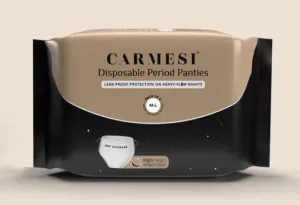
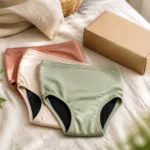

Period panties are washable, reusable underwear with a built-in absorbent core that replaces pads and tampons — or backs them up on heavy days. In Sri Lanka they cost roughly LKR 1,100–3,500 per pair, last two years or more with proper care, and can be delivered island-wide with cash on delivery. This guide covers everything: how they work, absorbency levels, sizing, cost versus pads, care, and where to buy — honestly, with no fluff.
Key takeaways
- Period panties absorb flow through 3–4 fabric layers: a moisture-wicking top, an absorbent core holding 5–50 ml, and a leak-proof outer barrier.
- One pair replaces roughly 2–4 disposable pads per wear, and pays for itself within about 4–6 months compared to buying pads monthly.
- Most people need 3–5 pairs for a full cycle rotation with washing in between.
- They are machine- or hand-washable — cold rinse first, no fabric softener, air dry.
- In Sri Lanka, reusable period panties ship island-wide in plain packaging with cash on delivery.
What are period panties?
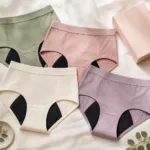
Period panties look and feel like regular underwear — briefs, boyshorts, high-waist or bikini cuts — but the gusset hides an engineered absorbent system. Instead of sticking a pad to your underwear or inserting a tampon, the underwear itself does the work. You wear a pair, rinse and wash it after, and reuse it for years.
They arrived in Sri Lanka later than in Western markets, which is why many women here still haven’t tried them — but adoption is growing fast, driven by comfort, long-term savings, and growing awareness of how much sanitary waste disposables create. If you want the deeper technical dive, our guide to reusable period underwear unpacks the materials layer by layer.
How do period panties actually work?
Every quality pair has three to four layers working together:
- Top layer (against your skin): a moisture-wicking fabric that pulls fluid down and away, so you feel dry rather than damp.
- Absorbent core: the engine of the panty — layers of microfibre or bamboo terry that lock fluid in. Capacity ranges from about 5 ml (light) to 50 ml (heavy/overnight).
- Leak-proof barrier: a thin, breathable waterproof membrane that stops anything reaching your clothes.
- Outer fabric: the part that looks like normal underwear — nobody can tell the difference.
Many pairs also use antibacterial treatments in the top layer to control odour — which is why a well-maintained pair doesn’t smell during normal wear.
Absorbency levels explained
Absorbency is the single most important thing to get right. Here’s how the levels compare:
| Level | Holds approx. | Equivalent to | Best for |
|---|---|---|---|
| Light | 5–10 ml | 1–2 pads | Spotting, first/last days, discharge, backup |
| Moderate | 10–20 ml | 2–3 pads | Average flow days, work days |
| Heavy | 20–35 ml | 3–5 pads | Heaviest days, long days out |
| Overnight | 35–50 ml | 5+ pads | Sleeping, very heavy flow, postpartum |
If you’re unsure, start with one level higher than you think you need. A boyshort-style period pant adds extra coverage front and back, which makes it the most popular choice for overnight wear.
Period panties vs pads vs tampons: the honest comparison
| Period panties | Disposable pads | Tampons | |
|---|---|---|---|
| Cost over 2 years | LKR 8,000–15,000 (one-time, 4–5 pairs) | LKR 20,000–35,000 | LKR 25,000–40,000 |
| Comfort | Feels like normal underwear | Can shift, bunch, chafe | Internal; learning curve |
| Leak protection | Very good when sized right | Good, edges can leak | Good, needs timely changes |
| Waste created | Nearly zero | ~250+ pads/year to landfill | ~200+ tampons/year |
| Availability in Sri Lanka | Online, delivered island-wide | Everywhere | Limited outside cities |
Honest caveats: disposables still win on upfront cost (a single pack is cheaper than one pair) and on convenience when you have no access to washing. Many women use a hybrid approach — panties at home and overnight, disposables while travelling. If leaks are your main worry, see our focused guide to leakproof period panties.
Period panties or a menstrual cup?
These two reusables solve different problems, and plenty of women use both. A menstrual cup collects rather than absorbs, holds more than any panty (up to 30–40 ml per empty), and is invisible under any clothing — but it’s worn internally, has a learning curve of a few cycles, and needs somewhere clean to empty it. Period panties have zero learning curve and nothing internal, but bulkier heavy-flow pairs are noticeable under very fitted clothes.
The most common combination we see: a cup for daytime on heavy days, with a period panty as overnight wear and leak backup. If cups intrigue you, start with our step-by-step menstrual cup guide.
Who are period panties for?
Almost everyone who menstruates, but they’re especially good for:
- Teenagers and first periods: nothing to insert, nothing to position — just underwear. Our first period guide for teens and parents covers how to prepare a school-ready kit.
- Heavy flow: overnight-level pairs act as fail-safe backup under a cup or tampon, or standalone protection while you sleep.
- Sensitive skin: no adhesives, no plastic top-sheets, no fragrance — a common relief for women who get irritation from pads.
- Postpartum: soft, high-waist styles handle recovery comfortably.
- Active lifestyles: pairs designed for movement stay put during workouts — and for the pool there’s dedicated period swimwear.
How to choose the right period panties in Sri Lanka
Four decisions, in order:
- Absorbency first. Match your heaviest intended use (see the table above). Most first-timers do best buying one moderate and one heavy/overnight pair to learn their flow.
- Style second. Briefs for everyday, boyshorts for overnight coverage, high-waist for postpartum comfort, bikini cuts for light days under fitted clothes.
- Size honestly. Period panties only leak when they gape. Measure your hip at the widest point and follow the size chart — when between sizes, size down for a snug gusset fit.
- Fabric for the climate. In Sri Lankan heat and humidity, cotton-rich and bamboo top layers breathe best and dry fastest on the line.
Ready to compare options and current prices in LKR? Our buying guide for period panties in Sri Lanka walks through what’s in stock and what each pair costs delivered.
How to wash and care for period panties
Care is simpler than most people expect:
- Rinse in cold water soon after wearing, until the water runs clear. Cold — hot water sets stains.
- Wash by hand or machine (gentle cycle, inside a mesh bag) with regular detergent.
- Never use fabric softener, bleach or hot water — softener clogs the absorbent core and kills performance.
- Air dry. Line-dry out of direct harsh sun. During monsoon months, dry near a fan — avoid ironing the gusset or tumble drying.
Cared for this way, a quality pair lasts 2+ years — roughly 24 cycles — which is what makes the economics work so strongly in their favour.
Do period panties smell?
This is the question everyone quietly worries about, so let’s answer it directly: a quality pair, worn within its absorbency limit and washed properly, does not smell during the day. Odour happens when fluid sits against skin and meets air — which is exactly what the wicking top layer prevents by pulling moisture down into the sealed core. Most premium pairs add an antibacterial treatment to the top fabric as a second line of defence.
When people do notice a smell, it almost always traces back to one of three causes: wearing a pair beyond its capacity, storing a used pair unrinsed for a day or more, or washing with fabric softener — which coats the fibres, traps residue and stops the wicking layer doing its job. Fix those three habits and odour simply is not part of the experience. It’s worth saying clearly: menstrual fluid itself is not dirty, and the anxiety around it is cultural, not biological.
Common mistakes first-timers make
Almost every disappointed first review of period panties comes down to one of these five avoidable mistakes:
- Buying one pair and testing it on the heaviest day. One moderate pair cannot absorb a heavy day — that’s a sizing decision, not a product failure. Start on a lighter day, or start with overnight absorbency.
- Choosing absorbency by price instead of flow. The cheapest pair is usually a light pair. If your flow is average or heavier, it will feel like it “doesn’t work”.
- Wearing a loose size. The gusset must sit against the body. A gaping fit is the number one cause of side leaks.
- Washing with softener or hot water. Both permanently reduce absorbency. Cold rinse, gentle wash, air dry — that’s the whole formula.
- Expecting the feeling of a pad. Period panties feel like underwear — dry and unnoticeable. First-timers often check repeatedly because they can’t believe nothing is leaking. That’s normal, and it passes.
Period panties in real Sri Lankan life
A few practical notes that guides written for other countries never cover:
- Heat and humidity: breathable cotton and bamboo top layers matter more here than in cooler climates. They wick faster, feel cooler on long commutes, and dry quicker on the line.
- Monsoon washing: in wet months, plan your rotation around slower drying — this is the main reason we recommend 4–5 pairs rather than 3. A ceiling fan dries a rinsed pair overnight.
- School days: for teens, one moderate pair comfortably covers a school day with no bathroom changes needed — often the single biggest confidence boost for girls managing periods at school.
- Long travel: bus and train journeys where bathroom access is unpredictable are exactly where period panties outperform pads — up to 12 hours of protection with an overnight pair.
- Power cuts and hand washing: nothing about period panties requires a machine. A cold-water hand rinse and detergent wash is the traditionally recommended method anyway.
The sustainability case, in Sri Lankan numbers
One menstruating person uses roughly 200–250 disposable pads per year — well over 8,000 across a menstruating lifetime. Each is a mix of plastics that takes centuries to break down, and most end up in landfill or waterways. Sri Lanka’s waste systems already struggle with plastic, and sanitary waste is a growing, rarely discussed part of that problem.
A rotation of five reusable pairs replaces around 500 pads over its two-year life. It’s not a total solution — most women keep some disposables for convenience — but it’s one of the few sustainability swaps that also saves money and improves daily comfort, rather than demanding sacrifice.
Where to buy period panties in Sri Lanka
Availability in physical stores is still limited, which is why most Sri Lankan women buy online. At period.lk we stock reusable period panties across absorbency levels and styles, plus menstrual cups and period swimwear — with three promises that matter here:
- Cash on delivery, island-wide — no card needed, pay when it arrives.
- Discreet plain packaging, always — no labels, no awkward moments.
- Free delivery over LKR 7,500 — which conveniently is about the price of a starter set.
Browse the full period panties collection to see current stock and prices.
Frequently asked questions
How much do period panties cost in Sri Lanka?
Expect roughly LKR 1,100–3,500 per pair depending on absorbency and brand. A full rotation of 4–5 pairs costs LKR 8,000–15,000 once, versus LKR 20,000+ spent on disposables over the same two-year lifespan.
How many period panties do I need?
Three to five pairs covers a full cycle for most people: wear one, wash one, dry one. Start with two pairs to learn your flow, then complete the rotation.
Can I wear period panties for a heavy flow?
Yes — choose heavy or overnight absorbency (20–50 ml, the equivalent of 3–5 pads). On your very heaviest days, many women pair them with a menstrual cup and use the panty as fail-safe backup.
Are period panties hygienic?
Yes, when washed properly between wears. The top layer wicks moisture away from skin and most quality pairs use antibacterial fabric to control odour. Rinse cold after wearing, wash with detergent, air dry fully.
How long can I wear one pair in a day?
Depending on your flow and the pair’s absorbency, typically 6–12 hours. If it starts to feel damp rather than dry, that’s the signal to change.
Can teenagers use period panties?
Absolutely — they’re one of the easiest first-period options because there’s nothing to insert or position. Many parents build a school kit around one moderate pair plus a spare in a pouch.
How do I order discreetly?
Every period.lk order ships in plain, unmarked packaging with cash on delivery available island-wide — nobody but you knows what’s inside the parcel.
Ready to try period panties?
Start small: one moderate pair and one overnight pair, worn on your next cycle at home. Most women know within two cycles whether they’re converts — and most are. Explore the collection at period.lk, delivered discreetly to your door anywhere in Sri Lanka, cash on delivery.
Frequently asked questions
How much do period panties cost in Sri Lanka?
Expect roughly LKR 1,100–3,500 per pair depending on absorbency and brand. A full rotation of 4–5 pairs costs LKR 8,000–15,000 once, versus LKR 20,000+ spent on disposables over the same two-year lifespan.
How many period panties do I need?
Three to five pairs covers a full cycle for most people: wear one, wash one, dry one. Start with two pairs to learn your flow, then complete the rotation.
Can I wear period panties for a heavy flow?
Yes — choose heavy or overnight absorbency (20–50 ml, the equivalent of 3–5 pads). On the heaviest days, many women pair them with a menstrual cup and use the panty as fail-safe backup.
Are period panties hygienic?
Yes, when washed properly between wears. The top layer wicks moisture away from skin and most quality pairs use antibacterial fabric to control odour. Rinse cold after wearing, wash with detergent, and air dry fully.
How long can I wear one pair in a day?
Depending on your flow and the pair's absorbency, typically 6–12 hours. If it starts to feel damp rather than dry, that is the signal to change.
Can teenagers use period panties?
Absolutely — they are one of the easiest first-period options because there is nothing to insert or position. Many parents build a school kit around one moderate pair plus a spare in a pouch.
How do I order period panties discreetly in Sri Lanka?
Every period.lk order ships in plain, unmarked packaging with cash on delivery available island-wide — nobody but you knows what is inside the parcel.