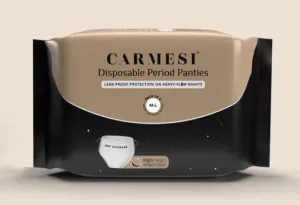
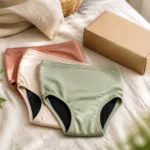

In a fair period panties vs pads and tampons comparison, no single product wins every category. Period panties are the most comfortable, most sustainable and cheapest over two years for most Sri Lankan women, but tampons still win for swimming and pads win for absolute lowest upfront cost. The right choice depends on your flow, budget, lifestyle and how much laundry you’re willing to do.
Key Takeaways
- Over two years, one small set of reusable period panties typically costs far less than repeatedly buying disposable pads or tampons in Sri Lanka.
- One pair of period underwear absorbs roughly the equivalent of 2–5 regular tampons, depending on the design and absorbency rating.
- Period panties require no insertion, carry no tampon-related TSS risk, and produce almost no monthly waste.
- Pads and tampons still win on instant availability at any pharmacy and on convenience when you can’t do laundry, like long travel days.
- Many women use a hybrid system: period panties as the daily base, with a tampon for swimming or a pad as backup on the heaviest day.
This article is the deep-dive comparison. If you’re new to the category and want the full background, our complete guide to period panties in Sri Lanka explains sizing, fabrics and how to start. Here, we focus purely on how the three products stack up against each other.
How does period underwear actually work compared to pads and tampons?
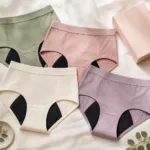
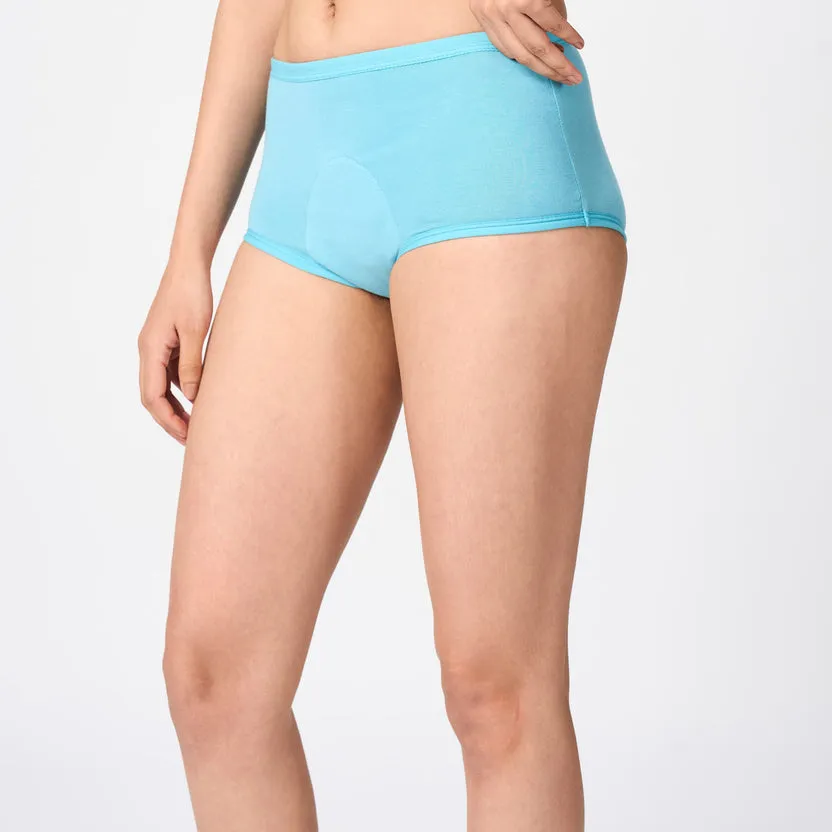
Period underwear works by absorbing menstrual flow directly into layered fabric built into the gusset of the underwear, so nothing needs to be inserted or stuck on. A typical pair has a moisture-wicking top layer that pulls blood away from your skin, an absorbent core that locks liquid in, and a leak-resistant outer layer that stops it passing through to your clothes. You simply wear them like normal underwear.
This is fundamentally different from the other two options. A pad sticks to the inside of your underwear and absorbs flow from outside the body. A tampon is inserted into the vagina and absorbs flow internally before it exits. So the real distinction is: tampons are internal, while both pads and period panties are external. Period panties combine the “nothing inside your body” comfort of a pad with the invisibility and reusability that disposable pads can’t offer. Modern reusable period panties are engineered to feel like ordinary cotton underwear once you have them on, which is why so many women switch after trying them once.
How do absorbency and flow levels compare?
Absorbency is where you need to match the product to your flow rather than assume one is universally “better.” Tampons and pads come in labelled absorbencies (light, regular, super, super-plus), and period panties are sold in similar tiers, usually described as light, moderate, heavy and overnight.
As a practical rule, one pair of moderate-to-heavy period underwear holds roughly the equivalent of 2–5 regular tampons’ worth of liquid. Here’s a simple way to think about the three:
- Light days: A light-absorbency pair of period panties, a liner, or a light tampon all comfortably manage the flow.
- Moderate days: A moderate/heavy pair usually lasts most of a work or school day; a regular tampon or pad typically needs changing every 4 hours.
- Heavy days: This is where you plan carefully — see the next section.
The honest limitation is that no external product magically expands. Once a pair of period panties reaches capacity, it will feel damp, just as a saturated pad does. The difference is that a tampon signals fullness through leaking, a pad through visible saturation, and period panties through a gradual damp feeling — so learning your own timing matters with all three.
Which is best for heavy flow and overnight use?
For heavy flow and overnight protection, high-absorbency period panties are often the most reassuring option because they cover a wider area of fabric and don’t shift out of place while you sleep. A dedicated overnight pair is designed with a longer, higher-rising absorbent gusset that protects against back-leaks when you’re lying down — a common failure point for pads, which can bunch or slide.
That said, tampons paired with a pad or period panties are still popular for extremely heavy days, because an internal product plus an external backup gives two lines of defence. If your flow is unusually heavy, soaks through protection in under two hours, or has changed suddenly, that’s worth discussing with a healthcare professional rather than solving with a bigger product. For most women, one overnight pair of period panties comfortably replaces the “night pad plus fear of leaks” routine. Browse the period panties collection to compare overnight and heavy-flow styles side by side.
Are period panties more comfortable and less irritating?
Most women find period panties more comfortable than pads and, for some, more comfortable than tampons, because there’s no adhesive bunching, no plastic edges chafing the thighs, and nothing inserted. Pads can feel hot and bulky in Sri Lanka’s humidity, and the plastic backing traps moisture against the skin, which some people find causes irritation or a rash over a long, sweaty day.
Tampons avoid the bulk entirely but can feel uncomfortable if inserted incorrectly or if used on very light days when there isn’t enough flow to keep things lubricated — dryness on removal is a common complaint. Period panties sidestep both problems: the breathable fabric sits flat, and there’s no insertion. People with sensitive skin often prefer them because there’s no fragrance, adhesive or synthetic surface layer touching the vulva for hours. The trade-off is that once saturated, period panties stay damp against the skin until you change them, whereas a fresh tampon or pad restores a dry feeling instantly.
How do leak protection and changing frequency compare?
Leak protection depends less on the product type and more on matching absorbency to flow and changing on time. Here’s how the three typically behave through a normal day:
| Factor | Period Panties | Pads | Tampons |
|---|---|---|---|
| Typical wear time | 6–12 hrs (by absorbency) | 4–6 hrs | 4–8 hrs (max) |
| Back-leak risk overnight | Low (overnight styles) | Moderate (can shift) | Low if not overfull |
| Warning before leaking | Damp feeling | Visible saturation | Spotting/leak |
| Changing on the go | Needs a spare + bag | Quick, disposable | Quick, disposable |
The catch with period panties is logistics: to change during a long day out you need to carry a fresh pair and a waterproof bag for the used one. Pads and tampons win on pure convenience here — you change and bin them. This is why many women pair a full-day-rated pair with a tampon backup for unpredictable schedules. For a typical office or school day at home in Sri Lanka, though, one absorbent pair often lasts the whole day without a change.
Which is cheapest over time — reusable vs disposable?
Reusable period panties are almost always cheaper over two years, even though the upfront cost is higher. Disposables feel cheap per packet, but that cost repeats every single month for decades. Here’s an illustrative two-year comparison in LKR (actual prices vary by brand and flow):
| Product | Upfront / monthly cost | Approx. 2-year cost (LKR) |
|---|---|---|
| Disposable pads | ~LKR 600–900/month | ~LKR 14,400–21,600 |
| Tampons | ~LKR 800–1,200/month | ~LKR 19,200–28,800 |
| Period panties (set of 3–5) | One-time set + occasional top-ups | ~LKR 9,000–15,000 |
A quality pair of period panties, cared for properly, commonly lasts 1–2 years or more, which is why the running cost drops so sharply. The more months you use them, the bigger the saving. Pads win only on the very first month, because a single packet is cheaper than a starter set — but that advantage disappears fast. For a full breakdown of local pricing and what to buy first, revisit the period panties in Sri Lanka guide.
What about environmental impact and period waste in Sri Lanka?
Period panties dramatically reduce menstrual waste because one reusable pair replaces hundreds of disposables. A person using pads or tampons can go through thousands of single-use products in their lifetime, and each conventional pad contains plastic that does not biodegrade quickly. In Sri Lanka, most sanitary waste goes to landfill or is burned at home, and neither is ideal — plastic-heavy pads persist for a very long time, and burning releases fumes.
By contrast, switching your base protection to reusable period panties can cut your monthly disposable use to near zero if you rely on them fully, or roughly halve it if you use them alongside occasional pads. There’s a small environmental cost in washing (water and energy), but studies on reusable menstrual products consistently show their total footprint is far lower than repeated disposables. For environmentally conscious women, this is one of the clearest wins in the whole comparison.
How do ease of use and discretion compare?
On ease of use, period panties and pads share a big advantage over tampons: there’s nothing to insert. You just wear them, which makes them the simplest option for teenagers, for anyone uncomfortable with internal products, and for the postpartum weeks when tampons aren’t recommended. Tampons have a learning curve and can be fiddly, but once mastered they’re extremely quick to change.
On discretion under clothing, period panties are the clear winner over pads. There’s no bulk, no crinkle and no visible outline, so leggings, fitted trousers and light fabrics look completely normal — the whole point is that they look and feel like regular underwear. Pads can create a visible line or feel bulky under tight clothing, and the packaging can be noticeable in a bag. Tampons are invisible when worn, which is why they remain popular for swimming and beach days where an external product isn’t practical. If discretion under fitted clothing matters to you, period panties beat pads comfortably.
How do you clean and care for period underwear?
Caring for period panties is straightforward but does add a task disposables don’t have: laundry. The standard routine is to rinse the pair in cold water until the water runs clear, then machine or hand wash on a cold-to-warm cycle with mild detergent, and air dry. Avoid hot water (it can set stains), fabric softener (it clogs the absorbent fibres), and tumble drying on high heat.
The honest drawbacks to weigh up:
- Drying time: Thick absorbent gussets can take several hours to a full day to air-dry, which matters during Sri Lanka’s monsoon humidity. Owning a few pairs solves this.
- Laundry burden: You need a rinsing routine, which some people find inconvenient compared with binning a pad.
- Odour: Well-rinsed period panties don’t smell, but leaving them unwashed for a day can, just like any damp fabric.
Pads and tampons need no care at all — you use and dispose. That convenience is real, and it’s the main reason some women keep a few disposables on hand for busy stretches even after switching.
Are period panties safer than tampons?
Period panties carry no risk of Toxic Shock Syndrome (TSS) because nothing is inserted into the body, whereas TSS, though rare, is specifically linked to tampon use, especially high-absorbency tampons left in too long. This is one reason people who worry about internal products prefer external options. Pads share this safety advantage since they’re also external.
There has also been discussion about chemical exposure from certain disposable products and their fragrances or bleaching. Choosing external reusables with breathable fabrics avoids many of these concerns. That said, “safe” is not the same as “risk-free hygiene”: any product left too long can cause irritation or odour, so change period panties within their rated time and wash them properly. None of this is a substitute for medical advice — if you experience unusual symptoms, pain or very heavy bleeding, please consult a healthcare professional.
Which product suits which lifestyle or activity?
The best choice often comes down to what you’re doing that day, and many women mix products by situation:
- Students & office workers: Period panties as the all-day base — comfortable, discreet, one change (if any) needed.
- Swimming & water sports: Tampons win here; external products can’t be worn in water.
- Overnight & heavy days: Overnight-rated period panties, optionally with a backup on the heaviest day.
- Travel & long journeys: Disposables can be more convenient when laundry isn’t possible; carry a spare pair plus a wet bag if using panties.
- Postpartum & sensitive skin: External, insertion-free period panties are gentle and easy.
- Exercise & gym: Period panties stay in place better than pads and avoid tampon dryness on light days.
The takeaway is that this isn’t strictly an either/or decision. A hybrid approach — reusables as your everyday base, disposables reserved for specific situations — often gives the best of comfort, cost savings and practicality.
Frequently Asked Questions
Are period panties better than pads and tampons?
For everyday comfort, discretion, cost over time and sustainability, period panties usually come out ahead. Pads and tampons still win on instant availability and on situations like swimming or travel where laundry isn’t possible. Many people use a combination.
How many tampons is one pair of period underwear equal to?
A moderate-to-heavy pair of period underwear typically holds the equivalent of about 2–5 regular tampons, depending on the specific absorbency rating of the design.
Can period underwear replace tampons completely?
For most days, yes — many women use period panties exclusively. The main exception is swimming and water sports, where an internal product like a tampon is still needed.
Are period panties safer than tampons?
Period panties carry no Toxic Shock Syndrome risk because nothing is inserted internally. As with any product, change them within their recommended wear time and wash them properly. See a healthcare professional for any unusual symptoms.
Do period panties leak overnight?
Overnight-rated pairs are specifically designed with a longer, higher absorbent area to prevent back-leaks while lying down. Matching the absorbency to your flow is the key to staying leak-free.
How often do you need to change period underwear?
Depending on absorbency and your flow, a pair lasts roughly 6–12 hours. On lighter days one pair may cover the whole day; on heavier days you may change every few hours.
Are period panties more comfortable than pads?
Most users say yes. There’s no adhesive bunching, no plastic backing trapping heat, and no bulk — they feel like normal underwear, which is especially welcome in humid weather.
Which option is cheapest in the long run?
Reusable period panties are usually cheapest over time. Pads are cheaper for the first month only, but that cost repeats monthly, while a durable set of panties lasts a year or more.
The bottom line
In an honest period panties vs pads and tampons comparison, period panties are the strongest all-round choice for comfort, discretion, long-term cost and reducing waste in Sri Lanka — while pads and tampons keep clear advantages for instant availability, swimming and travel days without laundry. The smartest approach for many women is a hybrid one built around a comfortable, cost-saving reusable base.
Ready to try the option that saves money and cuts waste? Explore our range of reusable period panties designed for Sri Lankan bodies, flows and weather — and if you want help choosing your first set, start with our complete buyer’s guide.