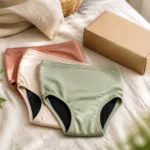


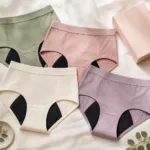

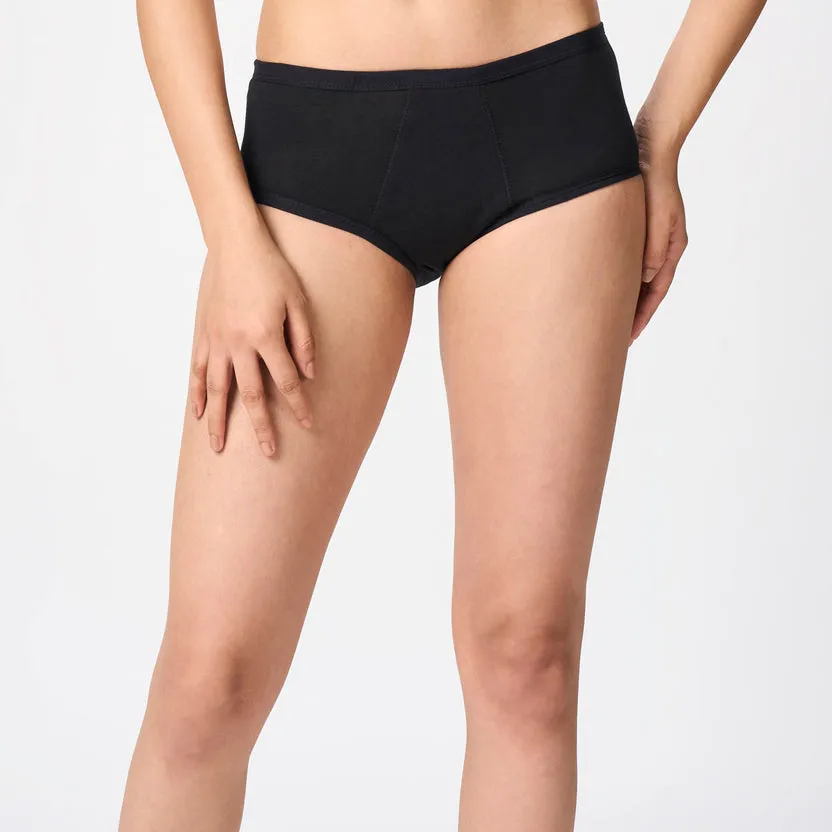
Period panties for heavy flow nights are high-absorbency underwear designed to hold 40–60 ml of fluid (roughly 8–12 tampons’ worth) while you sleep, using a full-length gusset, a leak-proof back panel, and multiple internal layers to stop side and back leaks. For a genuinely heavy overnight flow, look for a style labelled “overnight,” “super,” or “maxi” absorbency, with coverage that extends up the back and sits high on the waist. Below, we break down exactly how to choose, wear, layer, and care for them so you wake up dry.
Key Takeaways
- Overnight-grade period panties typically absorb 40–60 ml (8–12 tampons’ worth) — enough for most heavy flows across 8–12 hours of sleep.
- Back coverage matters more than front coverage at night, because blood pools toward whichever side you lie on; high-rise boyshorts protect side and back sleepers best.
- You can safely wear a clean pair for 8–12 hours overnight — change when the surface feels saturated, cool, or damp against your skin.
- For very heavy flow, fibroids, PCOS-related bleeding, or postpartum nights, pair panties with a cup or a pad as backup rather than relying on one product.
- Breathable fabrics like cotton and bamboo suit Sri Lanka’s humid climate and reduce the risk of odor and irritation during long overnight wear.
What counts as a “heavy flow” and why are nights harder to manage?
A heavy flow generally means soaking through a regular pad or tampon in two hours or less, needing frequent changes, or passing clots larger than a coin. Nights are uniquely challenging because you go the longest stretch without changing — often 8 to 10 hours — while lying flat, which changes how blood moves.
When you sleep, gravity works differently than when you’re upright. Blood no longer flows straight down onto the central part of a pad; instead it tracks backward toward your tailbone or sideways toward whichever hip you’re resting on. This is why so many people wake up to a stain on the sheet even though the front of their pad looks barely used. Side sleepers and back sleepers are most vulnerable, and curling into a foetal position can shift a poorly-fitted gusset out of place. A pad also bunches and folds overnight, opening gaps. Purpose-built period panties for heavy flow nights solve this by building absorbency directly into the fabric across a much wider area — front, centre, and well up the back — so there is no single point that can be overwhelmed or shifted. If you’re completely new to the category, start with our complete guide to period panties in Sri Lanka before choosing an overnight-specific style.
How much should overnight period panties absorb — in ml and tampons?
For a genuinely heavy overnight flow, look for panties rated to hold at least 40–60 ml, which equals roughly 8 to 12 regular tampons or 4 to 6 super pads. Anything under 20 ml is a light-to-moderate day style and will not last a full night on a heavy flow.
Absorbency is the single most important spec, yet it’s the one most easily hidden behind marketing words. Here’s how common ratings translate:
- Light / liner: 5–10 ml (1–2 tampons) — spotting or the last day only.
- Moderate: 10–20 ml (2–4 tampons) — a normal daytime flow.
- Heavy / super: 20–40 ml (4–8 tampons) — heavy daytime or a lighter overnight.
- Overnight / maxi: 40–60 ml+ (8–12 tampons) — heavy overnight protection.
The catch is that absorbency and time are linked. A 50 ml pair worn for six hours behaves differently than the same pair over eleven hours. If your flow is at the extreme end — soaking a super pad in under an hour on your first two nights — treat the panty’s rating as a guide, not a guarantee, and add a backup. When in doubt, size up in absorbency: an overnight pair that ends the night half-used is far better than one that reaches capacity at 4 a.m. You can compare absorbency tiers across our range of reusable period panties to match your flow honestly rather than optimistically.
How are heavy-flow night panties built — and what does each layer do?
Overnight period panties work through a stacked, multi-layer gusset — usually three or four bonded layers — that each perform one job so fluid moves in, spreads out, and stays locked away from your skin and the sheets.
The typical construction, from the side that touches you outward, is:
- Moisture-wicking top layer: pulls fluid away from your skin quickly so the surface feels dry, reducing that damp, cool sensation that wakes people up.
- Absorbent core: one or more layers (often microfiber or bamboo terry) that hold the volume and distribute it across the whole gusset instead of pooling in one spot.
- Leak-proof barrier: a thin, breathable waterproof membrane that stops anything reaching your sheets.
- Outer fabric: the comfortable, stretchy exterior that looks and feels like normal underwear.
For nights, the crucial detail is how far this stack extends. Daytime panties concentrate the layers under the front and centre. True overnight designs carry the absorbent core and the leak-proof barrier all the way up the back gusset toward the waistband, exactly where sleeping bodies leak. When shopping, check whether the product photos show coverage extending up the rear — not just a small central patch.
Reusable vs disposable period panties: which is better for heavy nights?
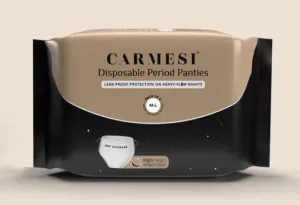
Reusable period panties are the better long-term choice for heavy flow nights on comfort, cost, and waste, while disposables suit travel, hospital stays, or the immediate postpartum days when washing isn’t practical. Both can deliver heavy overnight absorbency.
Here’s how they compare for overnight use:
| Factor | Reusable panties | Disposable panties |
|---|---|---|
| Absorbency | 40–60 ml+, consistent per pair | Similar, but varies by brand |
| Cost over time | Higher upfront, cheaper across 2–3 years | Low per pair, adds up monthly |
| Comfort & fit | Snug, tailored, breathable fabric | Looser, more like a pull-up |
| Waste | Minimal — washed and reworn | Landfill each cycle |
| Best for | Regular monthly overnight use | Travel, postpartum, emergencies |
For someone with heavy periods every single month, the maths favours reusables quickly. A quality pair used for two to three years replaces dozens of boxes of disposables and hundreds of pads. In Sri Lanka’s climate, reusables also win on breathability — cotton and bamboo let air move, whereas the plastic backing on many disposables can feel sweaty on a warm night. Browse our dedicated period panties collection if you want a washable overnight pair you can rotate through the month.
Which overnight features actually stop side and back leaks?
The features that prevent overnight leaks are extended back coverage, a high-rise or boyshort cut, and elastic that sits flush against your body at the legs and waist without gaps. Coverage placement beats raw absorbency numbers for night-time security.
Prioritise these when choosing:
- Full back gusset: the absorbent core should reach up your lower back, not stop at the crotch. This is the number-one predictor of a dry morning.
- High-rise or boyshort/boxer cut: more fabric across the hips and rear catches sideways flow when you sleep on your side. Bikini and thong cuts leave too much skin exposed for heavy nights.
- Snug leg elastic: the openings should hug your thighs so fluid can’t escape at the legs when you curl up.
- No gape at the waist: a waistband that gently grips prevents leaks when you shift positions.
For most heavy-flow sleepers, a high-waisted boyshort is the safest overnight silhouette. Briefs work well too if the back panel is long enough. The choice between them comes down to how you sleep: dedicated side and stomach sleepers benefit most from the extra hip and rear fabric a boyshort provides.
How long can I safely wear period panties overnight?
You can safely wear a clean, breathable pair of period panties for 8 to 12 hours overnight — the length of a typical night’s sleep. Change them when the surface feels saturated, cool, or wet against your skin, or first thing in the morning regardless.
The 8–12 hour window is comfortable because the moisture-wicking top layer keeps your skin relatively dry even as the core fills. Unlike a tampon, there is no fixed maximum-hour safety rule tied to toxic shock, because nothing is inserted. That said, hygiene still matters. Signs it’s time to swap immediately include a persistently damp feeling, noticeable odor, or that heavy, waterlogged sensation. In the morning, rinse and switch to a fresh pair for the day. If your flow is so heavy that a 60 ml pair reaches capacity before you’ve slept a full night, that’s a signal to add backup rather than to wear a soaked pair longer. Never re-wear an unwashed pair to save laundry — that’s where irritation and odor problems begin.
What fabrics keep you comfortable — especially in Sri Lanka’s climate?
Breathable natural fibres — organic cotton and bamboo — are the most comfortable for humid Sri Lankan nights because they let heat escape and are gentle on sensitive skin, while a thin waterproof layer handles the leak-proofing without trapping too much warmth.
Fabric choice is more than a comfort preference in a tropical climate. Warm, humid nights mean more sweat, and a fully plastic-lined panty can leave you clammy and increase chafing between the thighs. Look for:
- Cotton or bamboo top and outer layers: soft, breathable, and naturally moisture-managing.
- Microfiber cores: highly absorbent and quick-drying, which helps in Sri Lanka’s damp air where line-drying can be slow.
- Flat, bonded seams: reduce rubbing and chafing over a long night.
If you have sensitive skin or a history of irritation, avoid heavily fragranced or synthetic-heavy options and choose OEKO-TEX-style tested fabrics where possible. Our full period panties in Sri Lanka guide goes deeper into fabric selection for local weather and skin sensitivity.
What about very heavy flow, postpartum, fibroids, or PCOS bleeding?
For very heavy flow — including postpartum bleeding, fibroids, or PCOS-related heavy periods — the safest overnight strategy is to combine a maximum-absorbency panty with a backup method such as a menstrual cup or a pad, rather than depending on a single product.
These situations often exceed what any single garment can hold across a long night:
- Postpartum (including heavier bleeding): flow can be extremely heavy in the first days and may include clots. Disposable postpartum panties or a high-absorbency reusable pair with a maternity pad inside works well. Discuss unusually heavy or prolonged postpartum bleeding with your doctor or midwife.
- Fibroids or PCOS: flow can be both heavy and unpredictable. Layer a cup (which handles volume) with panties (which catch overflow and clots the cup misses).
- Passing clots: a cup captures clots better than panties alone, so a cup-plus-panty combination is ideal for clot-heavy nights.
If your bleeding is soaking through maximum protection every hour, or you feel dizzy or unusually fatigued, please consult a healthcare professional — that level of bleeding deserves medical attention, not just a stronger product.
What should I do if I still leak — and how do I get the fit right?
If you still leak with overnight panties, the cause is almost always fit, positioning, or capacity — not a faulty product. Check the back gusset placement, tighten the size, and add a backup layer for peace of mind while you troubleshoot.
A practical troubleshooting sequence:
- Check the size: too big and the gusset gaps at the legs; too small and it rides forward, leaving the back exposed. The waistband should sit flat without digging in.
- Position before sleep: make sure the absorbent panel is centred and pulled up snugly at the back.
- Match your sleep position: side sleepers need more hip coverage — switch to a high-rise boyshort.
- Add capacity: if you reach the panty’s ml limit, layer a pad or use a cup as primary collection.
- Protect the bed: a washable waterproof mattress protector removes anxiety entirely while you dial in the right combination.
Body shape affects fit too. If you carry weight on your belly, a high-rise sits more securely than a low-cut style; petite frames may need to size down to avoid leg gaping. Give any new pair two or three nights before judging — the first night is a fit test, not a verdict.
How do I wash and care for high-absorbency period panties?
Rinse in cold water until it runs clear, then machine or hand wash on a gentle cold cycle with mild detergent, and air dry — never use fabric softener, bleach, or a hot dryer, all of which clog the absorbent core and shorten its life.
Correct care directly protects absorbency, which matters most for heavy-flow pairs:
- Rinse first: cold water immediately after use prevents staining and odor. Hot water sets blood into the fabric.
- Wash gently: a mesh laundry bag protects them in the machine; cold water preserves the leak-proof membrane.
- Skip softener: it coats the fibres and stops fluid absorbing — the single most common reason panties “stop working.”
- Air dry: line or flat drying in shade keeps the waterproof layer intact. In humid weather, a fan speeds things up.
Cared for this way, a good pair lasts two to three years. Build a rotation of three to four overnight pairs so you always have a clean one ready during a heavy cycle.
Are overnight period panties hygienic — and safe for teens?
Yes — worn clean and changed every 8–12 hours, period panties are hygienic and safe, including for teenagers, because the moisture-wicking layer keeps skin dry and breathable fabrics limit bacterial and odor build-up.
Because nothing is inserted, they avoid the risks associated with leaving a tampon in too long. Odor is caused by fluid meeting air over time, so choosing breathable fabric and not re-wearing an unwashed pair keeps things fresh. For teens managing heavy periods, panties are often less intimidating than tampons or cups and require no learning curve — a clean pair on, a clean pair off in the morning. To reduce any irritation risk, choose soft, breathable fabrics, ensure a comfortable non-restrictive fit, and wash with mild detergent. If you notice persistent itching, unusual discharge, or a strong odor that washing doesn’t fix, check in with a healthcare professional.
Frequently Asked Questions
Can period panties really handle a very heavy flow all night without leaking?
Yes, overnight-rated pairs holding 40–60 ml (8–12 tampons’ worth) manage most heavy flows across 8–12 hours. If you soak a super pad in under an hour on your heaviest nights, add a menstrual cup or pad as backup rather than relying on the panty alone.
How many ml or tampons should overnight panties hold for heavy flow?
Aim for at least 40–60 ml, equal to roughly 8 to 12 regular tampons or 4 to 6 super pads. Look for labels like “overnight,” “maxi,” or “super” absorbency, and when unsure, choose the higher rating so the pair is half-used, not maxed out, by morning.
Is it safe to wear period panties for 8–12 hours overnight?
Yes. Since nothing is inserted, there’s no toxic-shock time limit like tampons. Wear a clean pair overnight and change it when it feels saturated, cool, or damp, or first thing in the morning. Never re-wear an unwashed pair, which is what causes odor and irritation.
Do I need backup protection with heavy-flow night panties?
Most people with a heavy flow do fine without backup, but if you bleed much more lying down, pass clots, or are postpartum, pair your panties with a menstrual cup or a pad. A cup captures volume and clots while the panty catches any overflow.
Which style is best for heavy-flow nights — boyshort or brief?
High-rise boyshorts are usually best for heavy nights because their extra hip and rear coverage protects side and back sleepers. Briefs work if the absorbent core extends well up the back. Avoid bikini and thong cuts overnight — they leave too much area unprotected.
How do I wash high-absorbency period panties so they keep working?
Rinse in cold water until clear, machine or hand wash cold with mild detergent, and air dry. Never use fabric softener, bleach, or a hot dryer — these clog the absorbent core and are the most common reason panties lose effectiveness over time.
What size stops leaks at the legs and waistband when I sleep on my side?
Choose a snug fit where the leg elastic hugs your thighs and the waistband sits flat without gaping. If you curl up on your side, a high-rise boyshort gives the hip and rear coverage that prevents sideways leaks. Too large a size causes leg gaping; too small pulls the gusset forward.
Are period panties good for teens and postpartum bleeding at night?
Yes to both. Teens often find panties easier and less intimidating than tampons or cups. For postpartum nights, use maximum-absorbency or dedicated postpartum panties, often with a maternity pad. Consult your doctor or midwife if postpartum bleeding is unusually heavy or prolonged.
The bottom line
Sleeping through a heavy flow without waking up to check the sheets is completely achievable with the right pair. Prioritise back and hip coverage, an honest 40–60 ml absorbency rating, breathable cotton or bamboo for our warm climate, and a snug fit — then add a cup or pad as backup on your heaviest nights. Care for your pairs properly and they’ll protect you cycle after cycle for years.
Ready to sleep easy? Explore period.lk’s range of overnight-ready reusable period panties designed for Sri Lankan bodies and weather, and read our full period panties in Sri Lanka buyer’s guide to match the right absorbency and cut to your flow.