
Recent Articles
Littlemiss Sri Lanka: The Honest Guide to Period Cups, Discs & Reusable Care (2026)
If you have ever sat on the edge of your bed at 2am with a burning, raw feeling between your thighs and quietly wondered whether something is wrong with you — nothing is wrong with you. You are having a completely normal reaction to a plastic product pressed against the most sensitive skin on your body, for eight hours a day, in 30°C heat and 80% humidity.
Sri Lankan menstruators talk about this constantly in private and almost never in public. Scroll through any local discussion thread on the topic and the same words come up again and again: rash, burning, itching, chafing, “pad burn,” antihistamines, steroid cream. Alongside them sits a second, stranger complaint that has nothing to do with skin at all — the garbage collector who opens your bag in front of the neighbours to check what is inside it.
This guide is about the way out of both problems. It covers the Littlemiss range of reusable period care — cups, the menstrual disc, ultra-thin reusable pads and period underwear — what the products actually are, who each one suits, what they cost over time, and the honest catches nobody puts in the marketing copy.
We stock Littlemiss at period.lk, so treat this as an informed retailer’s guide rather than a neutral third-party review. We have tried to be straight with you about the trade-offs anyway, because a cup sold to the wrong person just becomes an expensive drawer ornament.
The Hidden Struggle: Why Disposable Pads Are Failing Sri Lankan Women
The rash nobody warns you about
A modern disposable pad is not cotton. The layer touching your skin is usually a perforated plastic “dry-weave” top sheet — the same technology marketed under names like Drytex and dry-top. It is engineered to pull fluid away fast and feel dry to the touch.
The problem is what that dryness costs. A plastic sheet does not breathe. In Sri Lankan heat it traps warmth and sweat against skin that is already occluded, and the perforations create thousands of tiny raised edges that saw against you every time you walk.
What people describe from there follows a grim pattern:
- Contact irritation — redness and burning along the exact shape of the pad, worse where the edges and wings sit.
- Allergic contact dermatitis — a genuine immune reaction to fragrances, adhesives or the superabsorbent core, which spreads beyond the contact area.
- Chafing and friction sores on the inner thighs, especially for anyone commuting, walking or standing all day.
- Sensory overload — the texture, the crinkle, the smell of fragranced pads. This is a real and valid complaint, particularly for neurodivergent people, and it deserves more respect than it gets.
Sri Lankan users report the reaction across most of the mass-market brands on local shelves — the fragranced and heavily “dry-weave” variants come up most often, and plain cotton-surface pads come up as the thing that helped. That pattern points at the surface material rather than at any one company.
Important, and we mean this: a rash that keeps coming back, weeps, blisters, or does not settle within a few days after you stop using the product is not something to solve by reading a blog. Several people in local threads needed prescription antihistamines, antifungals or a steroid cream — and at least one turned out to have an infection, not an allergy. Switching products may well fix the cause, but see a doctor or pharmacist about the skin you have right now. Long-term unsupervised steroid cream use causes its own serious problems.
The garbage-bag problem nobody talks about
This is the part that genuinely surprises people who have not lived it, and it is a specifically Sri Lankan pressure.
Across many municipal areas, used pads and diapers must be bagged separately from ordinary household waste. In principle that is a reasonable sanitation rule. In practice, what women describe is this:
- Collectors opening bags at the roadside, in front of neighbours, to inspect whether pads are inside.
- Being charged an extra fee to take the “pad and diaper” bag at all.
- Collection that comes once a week or less, leaving used products sitting in a hot house for days.
- Having to escalate to the Grama Niladhari or write letters to the council just to get a basic service performed.
The humiliation is the actual product being delivered here. As one woman observed about the whole ritual, a man setting out his own rubbish would never be made to stand there and justify its contents.
Reusables sidestep this entirely. A cup or disc is emptied into the toilet and rinsed. Period underwear and cloth pads are rinsed and washed with your laundry. There is no bag, no inspection, no surcharge, and nothing sitting in the bin waiting for a collection day that may not come.
And then there is the landfill
A single disposable pad is up to 90% plastic and takes an estimated 500–800 years to break down. A person menstruating for around 40 years gets through somewhere in the region of 10,000–15,000 disposable products in a lifetime.
One Littlemiss cup, cared for properly, replaces most of that for years at a time. If you want the fuller picture, we go into it on our sustainability page.
Why Littlemiss Is Changing Period Care in Sri Lanka
Littlemiss is a Sri Lankan period care brand that has become, for a lot of people here, the default first cup — largely because it was one of the first genuinely accessible options that did not require someone’s cousin to bring one back from abroad.
The material actually matters: Wacker ELASTOSIL® silicone
Littlemiss cups and discs are made from 100% medical-grade silicone by Wacker, specifically ELASTOSIL®. If that sounds like specification-sheet noise, here is why it is the single most important line in this article for anyone with reactive skin:
- It is 100% latex-free. Latex allergy is common and can be severe. Some cheaper cups sold online are silicone-latex blends — a real hazard if you are sensitised.
- It is hypoallergenic and non-porous. Nothing soaks in, so bacteria have nowhere to lodge, and there is no fragrance, adhesive or dye to react against.
- It is chemically stable. It tolerates repeated boiling without degrading or leaching.
- It is a named, traceable material from a major industrial supplier. “Medical-grade silicone” as an unattributed phrase on a marketplace listing means very little. A specified grade from a named manufacturer is a claim that can be checked.
If plastic pad surfaces are what wrecked your skin, this is precisely the variable you are changing.
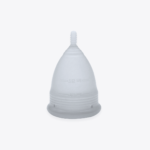
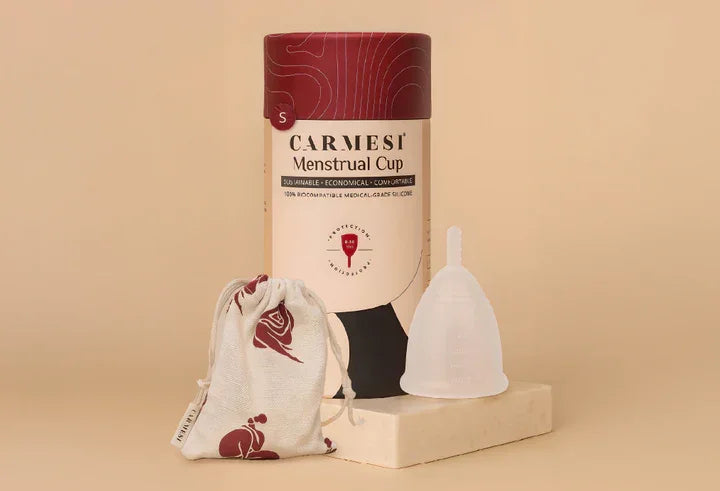
Littlemiss Menstrual Cup — XS, Small and Large
A bell-shaped silicone cup that sits low in the vaginal canal and collects flow rather than absorbing it. Because it holds rather than soaks, it does not dry out your natural moisture the way a tampon does, and there is no wet surface resting against your vulva at all.
- Up to 12 hours of wear depending on your flow — a full working day, a full night’s sleep, a full flight.
- Noticeably soft and malleable. This comes up repeatedly from Sri Lankan users comparing it against firmer imported and latex-blend cups, and softness is the single biggest factor in whether a beginner can actually get the thing in.
- Three sizes so the fit can match your body rather than the other way round.
Browse the sizes: Cup XS · Small · Large · Cup Duo
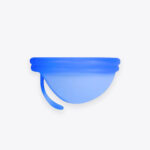
Littlemiss Reusable Menstrual Disc
The disc is the option most people have never heard of, and it is quietly the best answer for heavy flow.
Instead of sitting in the vaginal canal, a disc tucks up into the vaginal fornix behind the pubic bone. It uses a dual silicone construction — an ultra-thin, silky catch that adapts to your contours, plus a sturdy looped tab so removal is a controlled pull rather than a fumble.
- Around 50 ml capacity — more than five super tampons’ worth. For heavy bleeders and anyone with endometriosis or fibroids, this is the headline feature.
- Sits differently, so it suits people with a low cervix or those who find a cup’s suction seal uncomfortable.
- The looped tab solves the one complaint that makes people give up on discs entirely.
See the Littlemiss Reusable Menstrual Disc →
Ultra-thin reusable pads and period underwear
Not everyone wants anything internal, and nobody should be pressured into it. This is the line that reusable-cup evangelists forget, and it is the reason a lot of people quietly stay on disposables while feeling bad about it.
Littlemiss ultra-thin reusable pads are cloth pads with curved edges and a silicone grip strip that keeps them from travelling. They are breathable fabric against your skin instead of perforated plastic — the same fix as a cup, without anything going inside you. Reusable moderate absorbency pads →
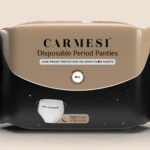
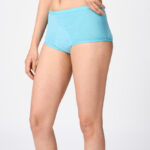
Period underwear looks and wears like normal underwear with absorbent layers built into the gusset. It is the single easiest switch in this entire article, because it requires you to learn nothing at all.
The combination most experienced users land on: a cup or disc for the actual flow, plus period underwear underneath as backup. You get the capacity and freedom of the internal product with a safety net for the learning curve — and on light and spotting days, the underwear alone is enough.
What Actually Changes in Daily Life
You stop editing your life around your period
The most common thing people say after switching is not about comfort. It is that they stopped cancelling things.
The pattern is familiar: you skip the beach trip, you decline the hike, you avoid the long bus journey, you plan every outing around where you can change discreetly — and if a leak has ever happened to you in public, the anxiety compounds until staying home simply feels easier. Some people describe going to the bathroom to change the instant they feel the smallest flow, over and over, all day.
With up to 12 hours of protection and nothing pressed against your skin, that calculation changes. Swimming, surfing, long-haul travel, hiking, double shifts, cricket practice — none of them require a plan. Our guide to swimming on your period covers the water side in more detail.
The money, done honestly
A Littlemiss cup or disc is a one-time purchase in the region of Rs 3,000–3,750, and with proper care it lasts for years.
Set that against disposables. A moderate user gets through two to three packs a cycle. At roughly Rs 400–600 a pack, that is somewhere around Rs 1,000–1,500 every single month — call it Rs 12,000–18,000 a year, forever, with no end date.
On that basis a cup pays for itself in roughly two to three cycles. Everything after that is money you simply keep. Over ten years the gap runs well past Rs 100,000.
Two honest caveats. First, you may need to try more than one size before you find your fit, so budget for the possibility. Second, reusable pads and period underwear are a larger upfront spend than a single cup because you need several in rotation — we did that maths properly in how many period panties you actually need.
A Beginner’s Guide to Littlemiss Cups and Discs
What follows is the orientation. For the full walkthrough with every fold and troubleshooting step, read our dedicated step-by-step menstrual cup guide for first-timers.
Choosing your size
Size is not about how “big” you are. It is about cervix height, flow volume, pelvic floor tone and whether you have given birth vaginally. As a rough orientation:
- XS — teenagers and first-timers, lighter flow, or anyone who wants the least intimidating possible starting point.
- Small — the common starting size for most adults under about 30 who have not given birth vaginally.
- Large — heavier flow, after a vaginal birth, or a higher cervix.
- Disc — very heavy flow, a low cervix, or if cup suction feels uncomfortable.
Littlemiss also runs an online sizing quiz on their own site, and real users cite it as the thing that got them to the right size first time. If you are unsure, message us — we would genuinely rather spend five minutes helping you choose than sell you the wrong one.
Insertion, in plain language
Wash your hands. Get comfortable — squatting, one leg raised, or sitting on the toilet. Then fold:
- C-fold: flatten the cup and fold it in half into a C. Simple, but a wider insertion point.
- Punch-down fold: push one side of the rim down into the base. This gives the smallest insertion point and is the one most beginners succeed with.
- The disc: pinch it in half lengthways, angle it downwards and back towards your tailbone rather than straight up, and push it up behind the pubic bone.
Once it is in, the cup should pop open. Run a finger around the rim to check it is round, and give the base a gentle quarter-turn to confirm the seal. If you can feel it, it is not in right. Correctly placed, you should forget it is there.
Relax your muscles and use a little water on the rim if you are struggling. Tension is the real obstacle, not anatomy — and almost nobody gets it on the first attempt. A learning curve of two or three cycles is completely normal.
Cleaning and care
- Between empties: tip into the toilet, rinse with clean water, reinsert.
- In a public bathroom with no sink: wipe it with tissue and reinsert. This is fine. Rinse properly at home.
- Every 4–8 hours on heavy days, and at minimum every 12 hours — never longer.
- Between cycles: boil in water for 5–10 minutes. Do not let it sit dry against the base of the pan.
- Storage: the breathable cotton pouch, never an airtight container.
- Avoid oil-based soaps, vinegar, bleach and harsh detergents — mild unscented soap only.
Safety, stated plainly: Toxic Shock Syndrome is rare but real, and it is associated with internal menstrual products generally, not tampons alone. Do not exceed 12 hours, wash your hands before insertion and removal, and boil between cycles. If you develop sudden high fever, vomiting, a sunburn-like rash, dizziness or confusion while using an internal product, remove it and get medical help immediately.
The myths, cleared up
“You can’t use a cup if your hymen is intact.” This one circulates locally as fact and it is not true. The hymen is not a seal — it is a thin, flexible rim of tissue around the vaginal opening that virtually always has an opening (menstrual blood leaves through it) and that stretches. Many people use cups without difficulty. Virginity is a social idea, not a medical state, and no product can take it from you. If you are young or not sexually active, start with XS, go slowly, and stop if there is pain.
“It will get lost.” Anatomically impossible. The cervix closes off the top of the vagina — there is nowhere for it to go. It cannot travel into your abdomen.
“It will hurt.” Correctly sized and correctly placed, you should not feel it. Pain means the size, angle or muscle tension is wrong, not that cups are not for you.
“It’s unhygienic.” Non-porous medical silicone that gets boiled between cycles is measurably more hygienic than a plastic pad sitting warm against your skin for eight hours. See is period blood dirty? for the science.
“I’d have to wash period underwear every time I use the bathroom.” No. You wear it exactly like normal underwear and change it once a day, or twice on a heavy day. It is backup protection, not something you rinse hourly. Our care routine guide covers the washing properly.
Period Products in Sri Lanka, Compared
| Disposable pads | Tampons | Littlemiss cup / disc | Reusable pads & period underwear | |
|---|---|---|---|---|
| Skin comfort | Poor — plastic top sheet, heat, friction | Good externally; can cause internal dryness | Excellent — nothing against the vulva | Very good — breathable fabric |
| For sensitive / reactive skin | The usual culprit | Reasonable | Best option — inert, latex-free silicone | Excellent, especially cotton |
| Wear time | 3–4 hours | 4–8 hours | Up to 12 hours | 6–12 hours |
| Heavy flow | Needs frequent changes | Limited capacity | Best — disc holds ~50 ml | Good in high-absorbency styles |
| Swimming & sport | Not possible | Workable | Excellent | Not for swimming |
| Cost, year one | Rs 12,000–18,000 | Similar or higher | Rs 3,000–3,750 once | Moderate upfront, then nothing |
| Disposal | Separate bag, fees, inspection | Same problem | None | None |
| Availability here | Everywhere | Patchy — applicator styles rare | Online, incl. period.lk | Online, incl. period.lk |
| Learning curve | None | Slight | 2–3 cycles, then automatic | None |
The tampon row deserves a note, because it is a genuine local gap. Applicator tampons are hard to find in Sri Lankan supermarkets. Shoppers report inconsistent stock across Keells, Cargills and Arpico, and many people rely on relatives bringing boxes back from overseas or on marketplace sellers. Non-applicator styles are more findable but put people off. For a lot of Sri Lankans, a cup is simply more reliably obtainable than a tampon — which is a strange sentence, and a true one.
For the reusable-versus-disposable question specifically, we go deeper in period panties vs pads and tampons.
Who Should Not Rush Into a Cup
An honest guide has to include this section.
- If you have an IUD, talk to your doctor first. It is usually workable, but you need to break the suction seal properly before removal.
- If you have vaginismus, active infection, or significant pelvic pain, get medical advice before trying anything internal.
- If the idea genuinely distresses you, start with period underwear or reusable pads. You will get most of the skin benefit and all of the disposal benefit with none of the learning curve. There is no hierarchy here.
- If you have a current, angry rash, treat the skin first. Get it seen, let it heal, then switch so it does not come back.
Making the Switch
If you have read this far, you probably already know which of these is your problem — the burning, the bin, the cancelled plans, or the running cost.
The switch does not have to be dramatic. Most people start with one product on one cycle, keep their usual supplies in the drawer as a safety net, and simply notice that the safety net went unused.
Where to start, depending on you:
- Rashes and sensitive skin, open to internal → Littlemiss Cup, Small (or XS if you are young or nervous)
- Heavy flow, endometriosis, long shifts → Littlemiss Reusable Disc
- Nothing internal, please → period underwear or ultra-thin reusable pads
- Not sure → the Cup Duo, or just ask us
Everything ships island-wide in plain, unmarked packaging, with cash on delivery available across Sri Lanka and free delivery over Rs 7,500 — see shipping & delivery. No pharmacy counter, no awkward conversation, no bag for anyone to open.
Shop all Littlemiss period care at period.lk →
This article is general information, not medical advice. For persistent rashes, unusual bleeding, severe pain or suspected infection, please consult a doctor or pharmacist.
Frequently asked questions
Is Littlemiss available in Sri Lanka?
Yes. period.lk stocks the Littlemiss range island-wide, including the menstrual cup in XS, Small and Large, the reusable menstrual disc, ultra-thin reusable cloth pads and Thraaya period briefs and boyshorts. Delivery is island-wide in plain unmarked packaging with cash on delivery available.
What is the Littlemiss period cup made of?
Littlemiss cups and discs are made from 100% medical-grade silicone by Wacker, specifically ELASTOSIL silicone. It is hypoallergenic, completely latex-free and non-porous, which is why it suits people who react to the plastic top sheet on disposable pads. Some cheaper cups sold online are silicone-latex blends, so the latex-free specification matters if you are sensitised.
Which Littlemiss cup size should I choose?
Size depends on cervix height, flow volume, pelvic floor tone and whether you have given birth vaginally, not on body size. XS suits teenagers, first-timers and lighter flow. Small is the usual starting size for adults under about 30 who have not given birth vaginally. Large suits heavier flow, a higher cervix or after a vaginal birth. Littlemiss also runs an online sizing quiz, and you can message period.lk for help choosing.
Can I use a menstrual cup if my hymen is intact?
Yes. The idea that you cannot is a myth that circulates widely in Sri Lanka. The hymen is not a seal but a thin flexible rim of tissue around the vaginal opening that virtually always has an opening, since menstrual blood passes through it, and it stretches. Virginity is a social concept, not a medical state, and no product can change it. If you are young or not sexually active, start with the XS size, go slowly and stop if there is pain.
Will switching to a menstrual cup stop my pad rash?
It often helps, because the usual cause is the perforated plastic dry-weave top sheet on disposable pads trapping heat and friction against the skin, and a cup removes that contact entirely. Reusable cloth pads and period underwear achieve the same by putting breathable fabric against the skin. However, a rash that keeps returning, weeps, blisters or does not settle after you stop using the product needs a doctor or pharmacist, since it may be an infection or a condition requiring prescription treatment rather than a product problem.
How much does a Littlemiss menstrual cup cost compared with disposable pads?
A Littlemiss cup or disc is a one-time purchase in the region of LKR 3,000 to 3,750 and lasts for years with proper care. Disposable pads run roughly LKR 1,000 to 1,500 a month for a moderate user, or about LKR 12,000 to 18,000 a year with no end date. On that basis a cup pays for itself in around two to three cycles.
How long can I wear a Littlemiss cup or disc?
Up to 12 hours depending on your flow, and you should never exceed 12 hours. On heavy days empty it every 4 to 8 hours. Rinse with clean water between empties and boil for 5 to 10 minutes between cycles. Toxic Shock Syndrome is rare but is associated with internal menstrual products generally, so if you develop sudden high fever, vomiting, a sunburn-like rash, dizziness or confusion, remove it and seek medical help immediately.
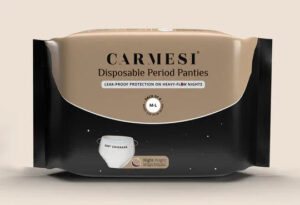
Reusable period panties
Leak-proof, washable, and delivered discreetly island-wide with cash on delivery.
Care that feels like care
Period tips and new arrivals. No spam, ever.